

For 60 years, Delta Dental of Massachusetts has helped generations of families care for their smiles. During that time, dentistry has seen remarkable advances, from new technologies and treatments to a growing understanding of the role oral health plays in overall wellness.
We asked Dr. Linda Vidone, Vice President of Clinical Management and Chief Clinical Officer at Delta Dental of Massachusetts, to reflect on how our understanding of oral health has evolved over the past six decades and what lessons are just as important today.
Q: If you could go back 60 years, what would surprise people most about dentistry today?
Dr. Linda Vidone: I think people would be amazed by how far dental technology has advanced. Today, we can detect problems earlier, treat them more conservatively, and help people keep their natural teeth longer than ever before. Digital imaging, 3D scanning, dental implants, and minimally invasive treatments have transformed the patient experience and improved outcomes in ways that would have seemed remarkable 60 years ago.
Perhaps most surprising is that many people can now expect to keep their natural teeth for a lifetime. Advances in prevention, early diagnosis, and treatment have made that a realistic goal for many patients, helping people enjoy better oral health and quality of life throughout their lives.
Q: How has our understanding of oral health changed over the past 60 years?
Dr. Vidone: Over the past 60 years, we've learned that oral health is about much more than preventing cavities and treating toothaches. Research has shown strong connections between oral health and overall health, including conditions such as diabetes, heart disease, and pregnancy complications. We now recognize that a healthy mouth is an important part of a healthy body.
Our understanding of prevention has also evolved. Today, we focus not only on treating disease but on identifying risk factors, detecting problems early, and helping patients maintain their oral health throughout their lives.
This has changed the way we think about oral health, not as something separate from the rest of the body, but as an important part of overall wellness.
Q: So what does all of this mean for our daily oral health routine?
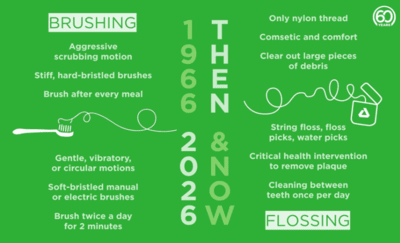
Dr. Vidone: The good news is that the fundamentals haven't changed. Brushing twice a day with fluoride toothpaste, cleaning between your teeth daily, eating a balanced diet, and visiting your dentist regularly remain the foundation of good oral health. These habits help prevent problems before they become more serious.
We also have better tools like electric toothbrushes and electric flossers that make it so much easier to maintain these essential preventive measures.
(See Dr. Vidone’s tips on choosing the best at-home dental essentials)
Q: What's one thing you wish more people knew about oral health today?
Dr. Vidone: I wish more people understood that most oral diseases are preventable. Too often, people think dental problems are simply a part of aging, but that's not the case. With regular preventive care, good daily habits, and early intervention when problems arise, many people can keep their natural teeth for a lifetime.
Oral health is one of the best examples of how prevention works. The choices we make every day can have a lasting impact on our health, comfort, confidence, and quality of life.
